


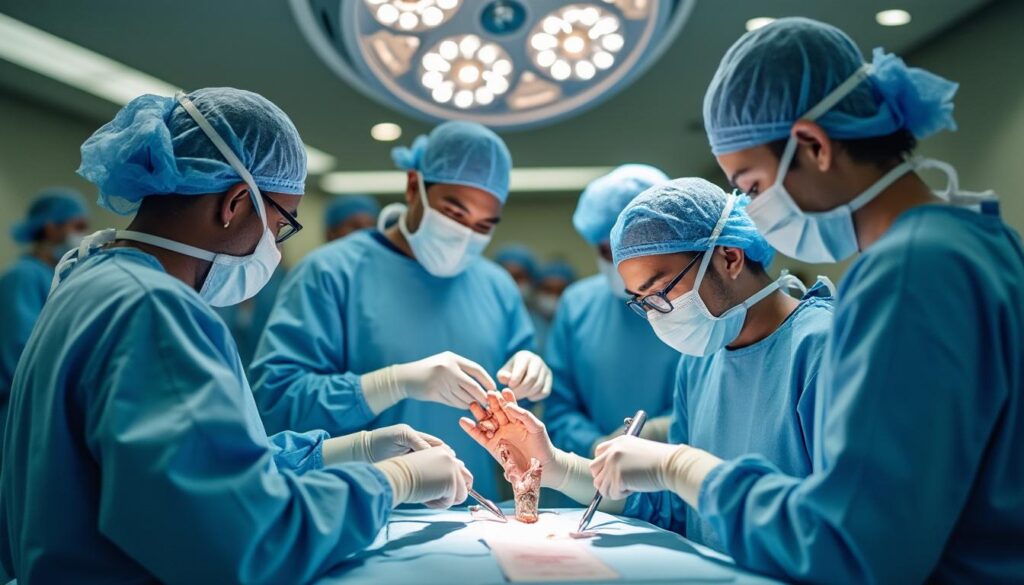
Every year, thousands face the profound challenge of losing an upper limb, a loss that touches not only physical ability but also identity and autonomy. Amid this reality, cutting-edge hand transplant programs emerge as beacons of hope, restoring function and dignity through pioneering surgical techniques combined with comprehensive rehabilitation. In Illinois, the Southern Illinois University (SIU) School of Medicine has launched its inaugural hand transplant program, marking a significant advancement in this specialized field. Supported by a generous $2.8 million grant from the Memorial Medical Center Foundation, this initiative aims to transform lives, enabling patients to reclaim independence and reconnect with the world through newfound mobility.
Advancing Upper Limb Transplantation: Illinois’ Trailblazing Hand Transplant Program
Illinois joins a select group of states pushing forward the frontiers of limb restoration. Each year, between 6,000 and 10,000 upper extremity amputations occur in the United States, affecting civilians and veterans alike. Remarkably, over 1,200 soldiers have suffered limb loss due to explosions in conflict zones such as Iraq and Afghanistan, highlighting an urgent need for innovative care. Recognizing this, the SIU School of Medicine’s program leverages multidisciplinary expertise to offer not just a surgical solution, but a comprehensive pathway toward life restoration.
Leading the initiative, Dr. Michael Neumeister emphasizes the institution’s extensive experience: “We probably see more amputations and microsurgical cases related to blood supply loss than most centers.” This depth of clinical exposure positions SIU to manage the intricate challenges patients face before, during, and after transplantation.
- Rigorous candidate screening ensuring optimal compatibility and readiness
- Complex microsurgery involving vascularized composite allotransplantation techniques
- Intensive post-operative rehabilitation focusing on nerve regeneration and physical therapy
- Immunosuppressive management tailored for each patient to prevent rejection
Life-Changing Opportunities Through Collaborative Innovation
The program interconnects with several pioneering organizations such as the LifeHand Initiative, Restore Touch Foundation, and HandInHand Transplant, enriching patient care with cutting-edge research and holistic support ecosystems. These collaborations are crucial in addressing multifaceted needs, from surgical advances to psychosocial rehabilitation.
- NewGrip Solutions providing adaptive devices tailored to transplant recipients
- SecondHand Life focusing on peer support and community integration
- ReGrasp Clinics specializing in personalized hand therapy regimens
- TouchAgain Project innovating in sensory restoration technologies
Early patient stories highlight transformations beyond mere physical restoration, emphasizing restored confidence and independence. These human-centered outcomes underscore the program’s mission: to renew not just limbs, but whole lives.
Comprehensive Care for Lasting Functional Recovery
Hand transplantation remains a complex journey beyond the operating room. Success hinges on supreme coordination between surgical teams, therapists, immunologists, and social workers, ensuring both physical and emotional recovery. The SIU program integrates these disciplines under one roof to optimize outcomes for every recipient.
- Pre-surgical conditioning to enhance recipient readiness
- Continuous immunological monitoring to balance graft survival and health
- Advanced hand therapy protocols supporting gradual functional gains
- Psychological counseling tailored to address adjustment and quality of life
- Long-term follow-up coordinating with initiatives like RestoreAbility and the Renewed Reach Program for ongoing support
As the program embarks on its journey, including coverage for up to five patients in its initial three years, its impact promises to extend far beyond Illinois. This initiative exemplifies the future of reconstructive transplantation, embodying hope and renewal for those facing life-altering limb loss.