

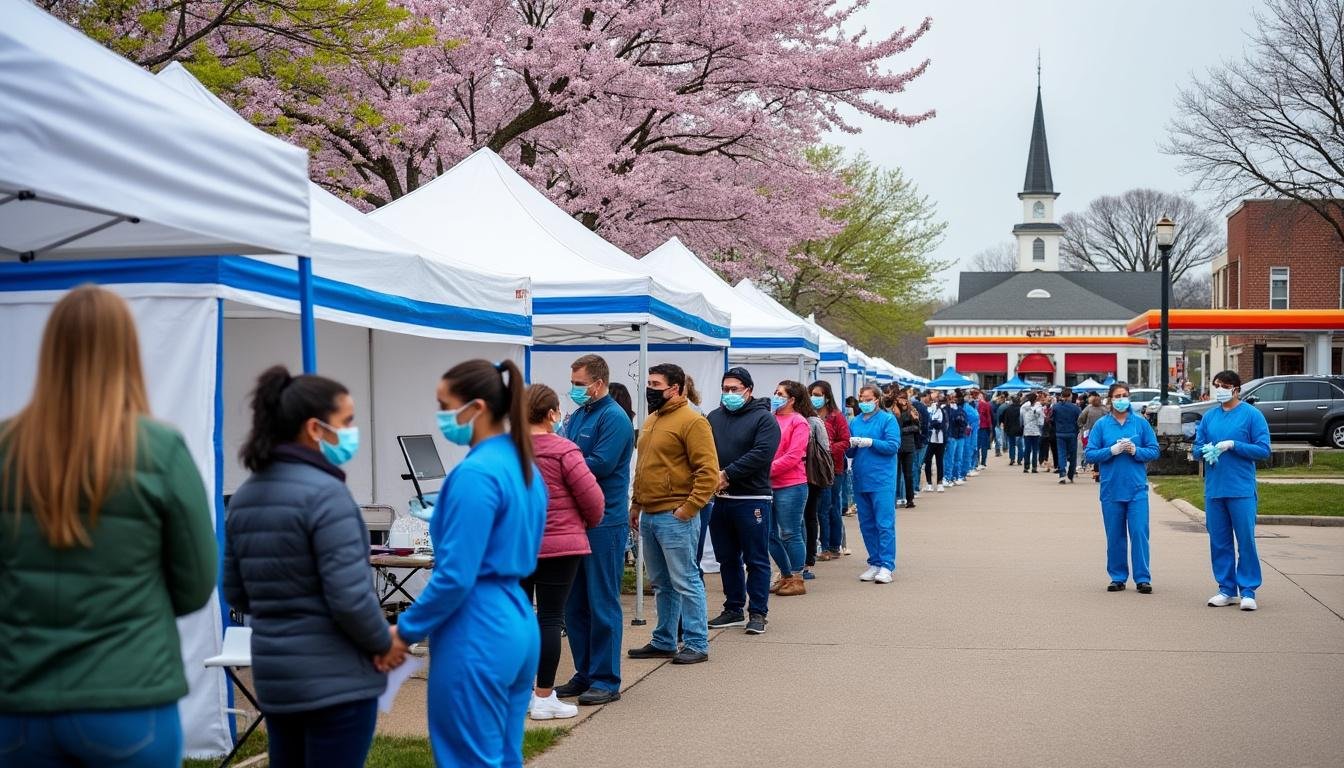
As COVID-19 testing remains a crucial tool in managing ongoing public health challenges in central Illinois, identifying reliable and accessible testing locations is paramount. With demand fluctuating and some recognized testing centers fully booked, residents find themselves navigating a complex landscape of official sites, pop-ups, and private providers. This environment, while offering multiple avenues for diagnosis, also raises concerns about the legitimacy and efficiency of certain testing options. In this context, a savvy approach to selecting testing sites—notably those affiliated with established healthcare networks and pharmacies—can ensure timely and accurate results while safeguarding one’s privacy and safety.
Certified COVID-19 Testing Locations in Central Illinois: Where to Go for Reliable Results
Experienced healthcare providers and state health experts prioritize certain locations for COVID-19 testing, emphasizing safety and regulatory compliance. Pharmacies like Walgreens, CVS Pharmacy, and Rite Aid remain dependable options for both rapid antigen and PCR tests. Additionally, large-scale health systems such as OSF HealthCare, Carle Health, and Springfield Clinic offer testing services with established standards and better oversight. Even hypermarket chains with health services, including Walmart Health and Hy-Vee Pharmacy, have expanded their COVID-19 testing operations, providing more opportunities for residents to get tested near their homes.
Here is a checklist to consider when deciding where to get tested:
- Verify the testing site’s certification and the lab’s CLIA accreditation, typically done by asking where your sample will be sent for analysis (Quest Diagnostics and LabCorp are notable certified labs).
- Ask if there will be any fees, particularly for the test administration; testing itself often should be covered by insurance or federal programs.
- Ensure the staff wear personal protective equipment (PPE), as it reflects compliance with safety protocols.
- Check if appointments are necessary or if walk-ins are accepted, as some facilities require prior registration.
- Confirm result turnaround times, which can range from 15 minutes for rapid tests to 48 hours for PCR testing.
Addressing the Rise of Pop-Up and Temporary Testing Sites in Illinois
The surge in demand during recent COVID-19 waves has led to an increase in ‘pop-up’ testing centers, whose reputational and operational integrity have sparked official warnings. Illinois Governor J.B. Pritzker and the Attorney General have urged caution, emphasizing that not all sites provide timely or reliable diagnostics. Some may neglect critical follow-up, leaving patients without results or proper guidance.
When considering non-traditional testing locations, residents should ask themselves the following:
- How quickly are test results returned? Labs overwhelmed with samples may delay outcomes for days.
- What laboratory processes the samples? Confirming lab accreditation is vital to trust results.
- Are detailed contact and identification protocols followed? These ensure traceability and appropriate medical response.
- Is the site transparent about costs and test types? Some may charge fees that are not justified or regulated.
How Central Illinois Urgent Care Centers Facilitate Convenient and Accurate COVID-19 Testing
Urgent care centers across central Illinois play an essential role in expanding access to COVID-19 testing and care. Central Illinois Urgent Care, for example, offers a model combining convenience, speed, and medical reliability, supporting the community with rapid and PCR testing on-site. Their approach — including vehicle-based sampling — reduces exposure risks while providing results often within an hour for rapid tests and typically 24 to 48 hours for PCR tests.
Key advantages of choosing urgent care facilities for COVID testing include:
- No appointment required, enhancing accessibility for symptomatic individuals or exposure contacts.
- Integrated patient examination enabling immediate assessment and advice beyond testing results.
- Use of certified labs, such as Quest Diagnostics and LabCorp, to ensure test accuracy.
- Additional health services like immunizations and treatment for minor illnesses, facilitating comprehensive care.
- Confidentiality and compliance with IDPH reporting requirements via platforms like Simple Report.
Staying Informed: How Emerging Therapies and Preventive Measures Influence Testing Needs
The landscape of COVID-19 continues to evolve with innovations including mRNA technology reshaping cancer vaccines and new nasal sprays showing promise in preventing Long COVID. Such developments in 2025 underscore the importance of timely and accurate diagnosis to manage symptoms effectively.
With the advent of a new triple vaccine combining COVID, flu, and RSV prevention explored in recent studies, understanding when and where to test remains a cornerstone of public health strategies. Further insights into breakthrough therapies offering single-shot cancer treatment illustrate the intertwined nature of infectious and chronic disease control.
Resources and Reporting: Ensuring Accountability in COVID-19 Testing Services
Illinois residents are encouraged to file complaints if they encounter testing services that violate regulations or betray trust. The Attorney General’s Consumer Protection Division actively investigates such reports to protect public health.
To report suspicious testing sites or seek assistance, contact the Illinois AG’s office or visit their online complaint portal. Reliable testing is not only accessible but also accountable, safeguarding the community against misinformation and malpractice.
- Contact details for reporting issues exist both online and via telephone.
- Multiple agencies coordinate investigations involving law enforcement and public health officials.
- Consumers should retain documentation and records of testing for potential follow-up.
