


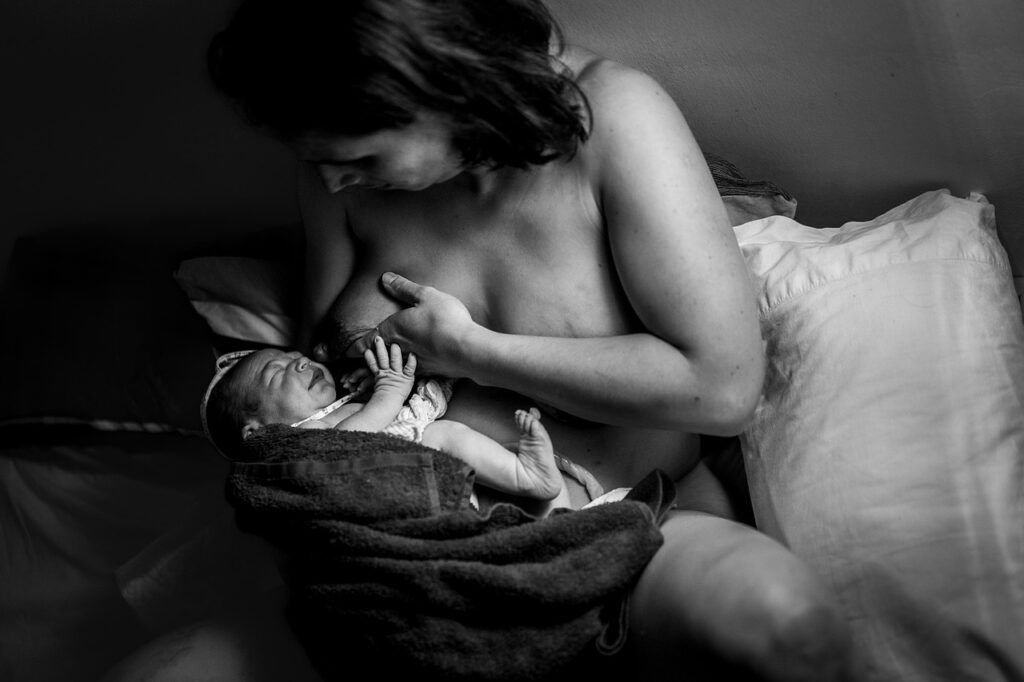
Despite being the most natural act of nourishment, breastfeeding in public continues to spark debate and discomfort, leaving many mothers feeling judged and isolated. While it’s a legally protected right across the nation, the court of public opinion often delivers a harsher verdict. This ongoing controversy isn’t just about modesty or etiquette; new research reveals a much deeper issue at play. A landmark 2023 study from the Leibniz Institute for the Social Sciences delved into the attitudes of over 4,000 adults and found a startlingly strong link between negative reactions to public breastfeeding and ingrained sexist beliefs. This isn’t just an abstract social issue; it has profound consequences on maternal well-being and infant health, often contributing to premature weaning and feelings of failure for new mothers. As we move through 2025, understanding these hidden biases is the first step toward fostering a culture where nurturing a child isn’t an act of bravery, but a celebrated, normal part of life.
In Brief: The Public Breastfeeding Debate
- 🤱 A Natural Act Under Scrutiny: Despite being legal and medically recommended, breastfeeding in public remains a controversial topic that causes stress for many mothers.
- 🔬 The Sexism Connection: A major German study confirms a strong link between hostile sexism—overtly negative attitudes toward women—and disapproval of public breastfeeding.
- 🤔 Surprising Findings: Even “benevolent” sexism, which seemingly idealizes motherhood, does not lead to more support and can subtly reinforce restrictive gender norms.
- 🌍 A Universal Issue: The study found these biases were present in both men and women, highlighting that this is a societal issue, not a gender-specific one.
- 💖 The Path Forward: Creating a truly supportive environment requires challenging deep-seated stereotypes and actively promoting acceptance for mothers and babies everywhere.
Unveiling the Hidden Judgment: Why Public Breastfeeding Remains a Hurdle
For generations, mothers have nourished their children at the breast, a fundamental act of love and biology. Yet, in 2025, the simple act of feeding a hungry baby in a park or café can still feel like a political statement. The discomfort many women report isn’t just paranoia; it’s a reflection of a persistent societal stigma. A recent study published in The Journal of Social Psychology brought this issue into sharp focus, revealing that opposition to public breastfeeding is strongly correlated with hostile sexist attitudes. This type of sexism views women who challenge traditional, modest roles with negativity, and public breastfeeding is often—and unfairly—perceived as such a challenge.
“I remember sitting on a park bench with my newborn, Leo,” shares Sarah, a 32-year-old graphic designer. “He was wailing, and I knew he needed to eat. As I started to nurse him, I felt the stares. One woman even shook her head at me. My own mother told me she used to hide in public restrooms to feed me. It’s heartbreaking to think that decades later, we’re still fighting for the same basic right to feed our children without shame.” This experience highlights how crucial it is that mothers receive knowledge and support for breastfeeding success, not just from family but from their entire community.
Beyond Discomfort: How Societal Attitudes Shape a Mother’s Choice
The study’s most compelling finding was the clear line drawn between hostile sexism and the disapproval of public breastfeeding. Participants who held negative stereotypes about women were far more likely to feel uncomfortable or angry seeing a mother nurse her child in public. Interestingly, their disapproval softened significantly when the act was performed in private, underscoring that the issue for them wasn’t breastfeeding itself, but its visibility. This social pressure can have serious health implications, forcing women to either stop breastfeeding early or to isolate themselves.
Even more surprising was the role of benevolent sexism—the seemingly “positive” view of women as pure figures needing protection. The researchers found that this attitude did not lead to greater acceptance. In fact, it was also linked to less approval, suggesting that any form of sexism that puts women on a pedestal or in a box can ultimately limit their freedom. The constant stress can take a toll, making it important for mothers to understand the top signs your hormones are out of balance and seek support when needed.
Nurturing a New Generation: Paving the Way for Acceptance
Creating a world where every mother feels supported is not just a dream—it’s a responsibility. The change begins with each of us. It’s about shifting the narrative from one of judgment to one of empowerment. For grandparents, it’s an opportunity to become fierce allies for their children, offering the unwavering encouragement they may not have received themselves. For community members, it can be as simple as offering a warm smile to a nursing mother instead of a curious stare. Providing this support helps mothers manage the immense stress of new parenthood, allowing them to find a sense of calm and focus amidst the chaos.
Practical steps are also essential. Businesses can designate welcoming spaces for nursing mothers, and public campaigns can normalize the imagery of breastfeeding. Education plays a vital role in dismantling the myths that fuel the stigma. The more we see breastfeeding as a normal, healthy part of daily life, the less power outdated prejudices will hold. It’s also critical for mothers to prioritize their own health, including knowing how much water you really need each day, as proper hydration is key to milk production.
Simple Ways You Can Be a Breastfeeding Ally:
- 😊 Offer a Smile: A simple, reassuring smile can make a world of difference to a mother who feels exposed or judged.
- 🗣️ Speak Up: If you witness someone making negative comments, offer a quiet word of support to the mother or gently redirect the critic.
- 🏡 Create a Welcoming Space: If you’re a business owner, make it known that breastfeeding mothers are welcome. A simple sign can be incredibly powerful.
- 📚 Educate Yourself and Others: Share positive information about the benefits of breastfeeding and challenge misinformation when you hear it. An informed opinion can help dispel myths about whether people really need supplements or can get nutrients naturally.
Breastfeeding Facts vs. Fiction
| Myth 👎 | Reality 👍 |
|---|---|
| It should only be done in private or in designated rooms. | A hungry baby needs to eat on demand. Breastfeeding is legal in public in all 50 states. |
| It’s indecent or immodest. | It is a biological act of nurturing a child. Mothers are typically very discreet. |
| Formula is just as good. | Breast milk provides unique antibodies and nutrients tailored to the baby’s needs, reducing risks of infections and chronic diseases. |
Is it actually legal to breastfeed in public?
Yes. As of 2025, all 50 U.S. states, the District of Columbia, Puerto Rico, and the Virgin Islands have laws that specifically allow women to breastfeed in any public or private location where they are otherwise authorized to be.
What can I do if someone confronts me about breastfeeding in public?
Stay calm and remember that you are within your rights. You can choose to ignore the person, calmly state the law, or simply say, ‘I am feeding my baby.’ Having a supportive friend or family member with you can also help. Your priority is your child, not a stranger’s discomfort.
Why is this still such a big deal today?
The controversy is rooted in deep-seated cultural norms about women’s bodies and their roles in society. The act of breastfeeding publicly challenges the idea that breasts are purely sexual objects and reclaims them as functional and nurturing, which can make some people uncomfortable. The recent study linking this discomfort to sexism confirms these underlying biases are still very much present.
Please note: The illustration photo accompanying this article was generated by an AI model. Fictional testimonials may have been included for illustrative purposes to highlight the experiences of mothers.